 Global Pharm Distribution, LLC

Description
NDC: 53335-052-11 (capsule), 53335-048-29 (powder)
Weight: 4 Oz
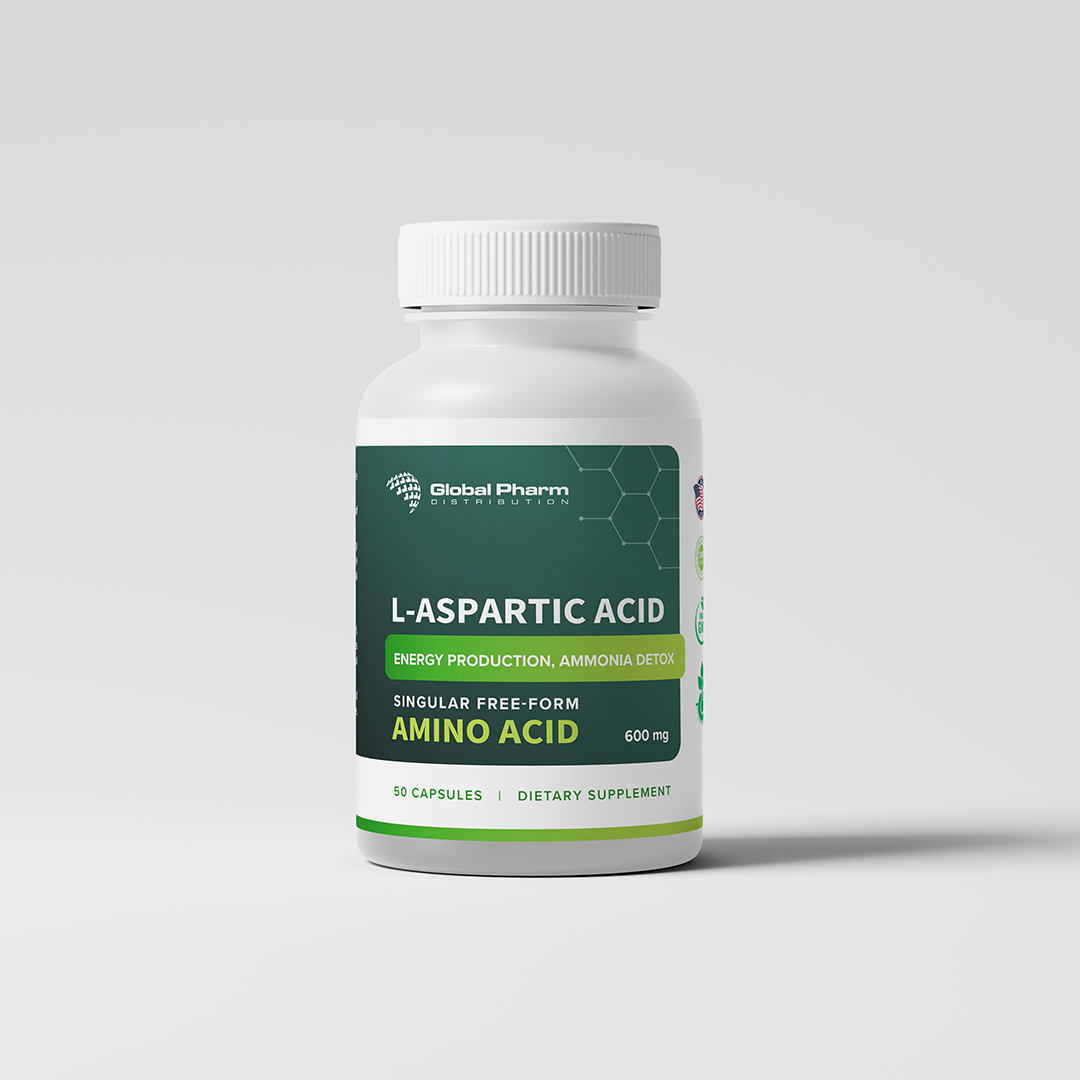
L-Aspartic Acid is a non-essential amino acid vital for numerous physiological processes, playing a key role in protein synthesis and energy production through its involvement in the Krebs cycle within mitochondria. This amino acid enhances stamina and resistance to fatigue, supports liver function by aiding ammonia detoxification, and contributes to DNA and RNA metabolism. L-Aspartic Acid also supports immune system function by promoting immunoglobulin production and antibody formation, and acts as an excitatory neurotransmitter, potentially benefiting mood regulation, including depression. Research highlights its metabolic significance in energy generation and ammonia clearance (e.g., Krebs 1953).
L-Aspartic Acid is particularly beneficial for individuals seeking to boost energy, support liver health, or enhance immune and neurological function. Manufactured using premium pharmaceutical-grade materials in a GMP-approved facility in the USA, L-Aspartic Acid is free of fillers, binders, or coloring agents, with no known side effects when used as directed.
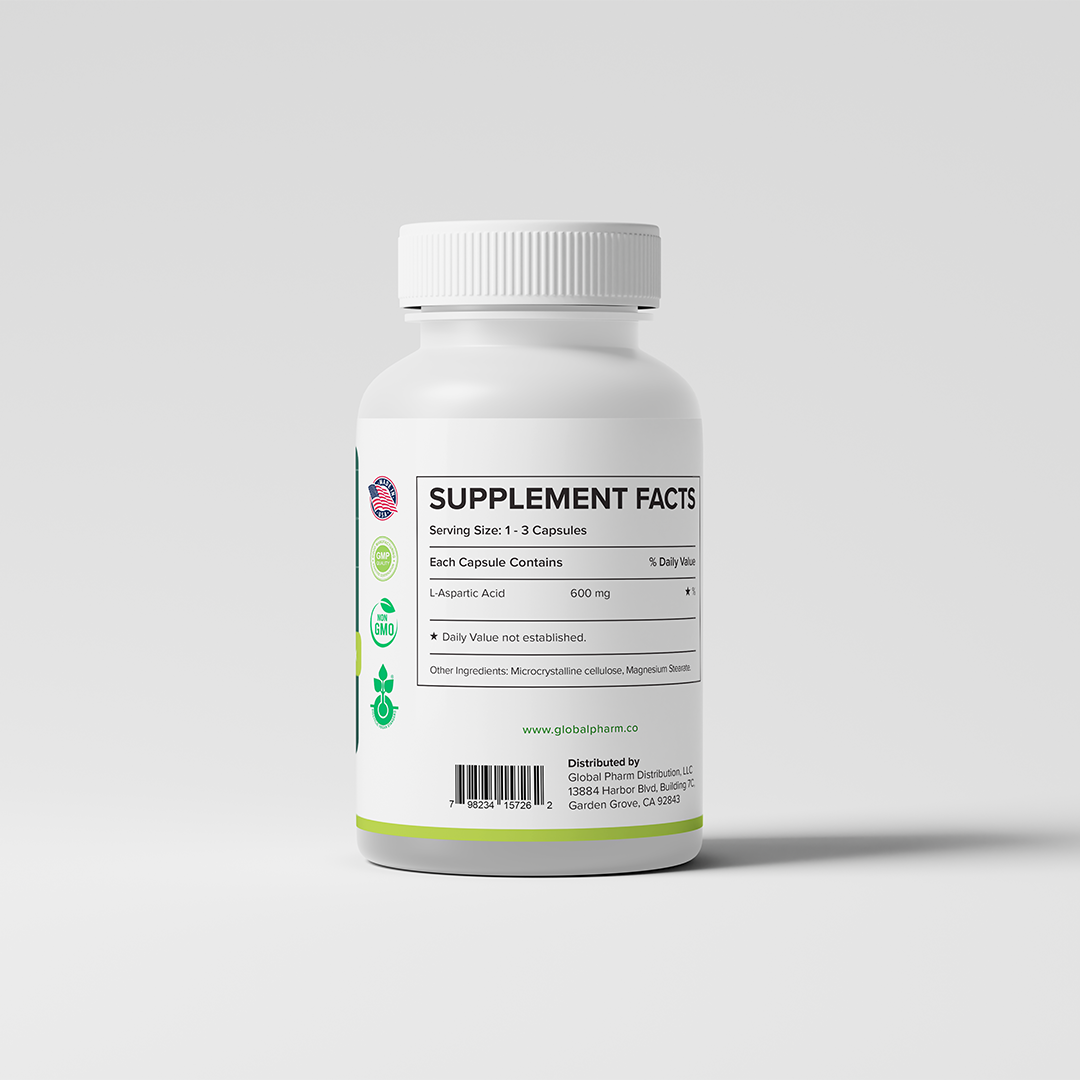
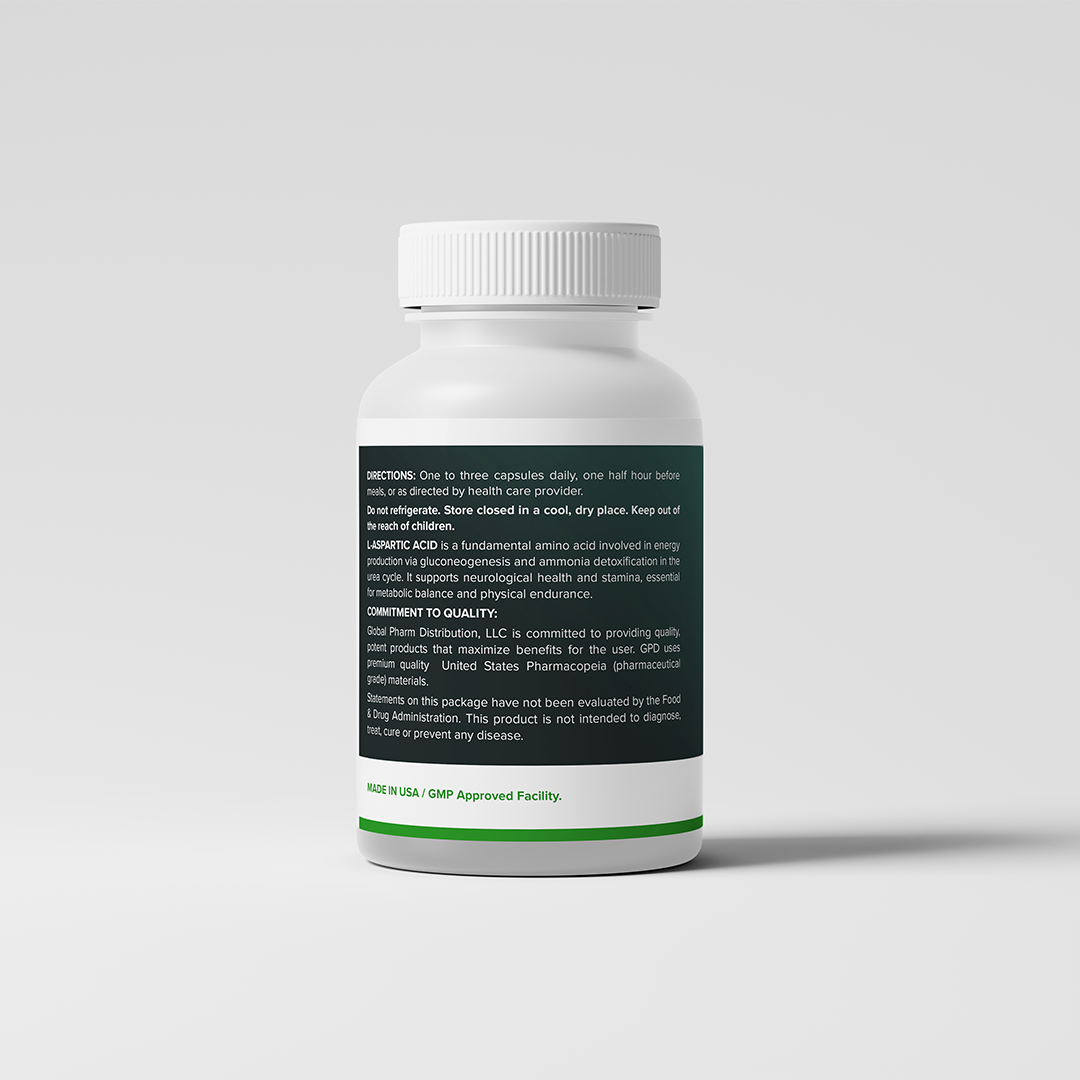
Directions: Take 1-3 capsules daily or as advised by your healthcare provider. Pair with vitamins and minerals; GPD’s MVM (Multivitamin) is recommended. Powder equivalent: 1/4 level teaspoon per capsule.
Key Benefits
- Supports Energy Production: Enhances Krebs cycle activity.
- Promotes Protein Synthesis: Essential for tissue repair.
- Boosts Immune Health: Aids antibody and immunoglobulin production.
References
- Krebs HA. (1953). “The citric acid cycle.” Biochemical Journal, NIH.
- Berg JM, Tymoczko JL, Stryer L. Biochemistry. 5th ed. W.H. Freeman; 2002.
- Scriver CR, et al. (2001). The Metabolic and Molecular Bases of Inherited Disease. McGraw-Hill.
- D’Aniello A, et al. (2000). “Aspartic acid: An excitatory amino acid neurotransmitter.” Journal of Neurochemistry, NIH.
These statements have not been evaluated by the Food and Drug Administration. This product is not intended to diagnose, treat, cure, or prevent any disease. Consult a doctor or medical professional before use, especially if you have underlying health conditions or are taking other medications.
Additional Information The following points provide insight into L-Aspartic Acid’s plasma levels and their association with various health conditions, reflecting its role in metabolism:
- Normal Range: 2-10 micromol/100 ml (approximate clinical range).
- Conditions Associated with Low Levels:
- Chronic fatigue syndrome (potential energy metabolism impairment)
- Liver dysfunction (reduced ammonia detoxification)
- Conditions Associated with High Levels:
- Hyperammonemia (from urea cycle overload or liver failure)
- Acidosis (metabolic stress increasing aspartate levels)
- Certain neurological disorders (e.g., epilepsy, due to excitatory effects)
Notes: L-Aspartic Acid is a non-essential amino acid integral to the Krebs cycle, supporting energy production, and aids in ammonia removal via the urea cycle. It acts as an excitatory neurotransmitter and supports protein, DNA, and RNA synthesis. Low levels may indicate metabolic or liver stress, while high levels are linked to ammonia buildup or neurological excitation. These associations are correlative and require further research for causal confirmation. Consult a doctor or medical professional before use, especially if you have underlying health conditions or are taking other medications.