 Global Pharm Distribution, LLC



Description
NAD+ (Nicotinamide Adenine Dinucleotide) – Research-Grade Coenzyme
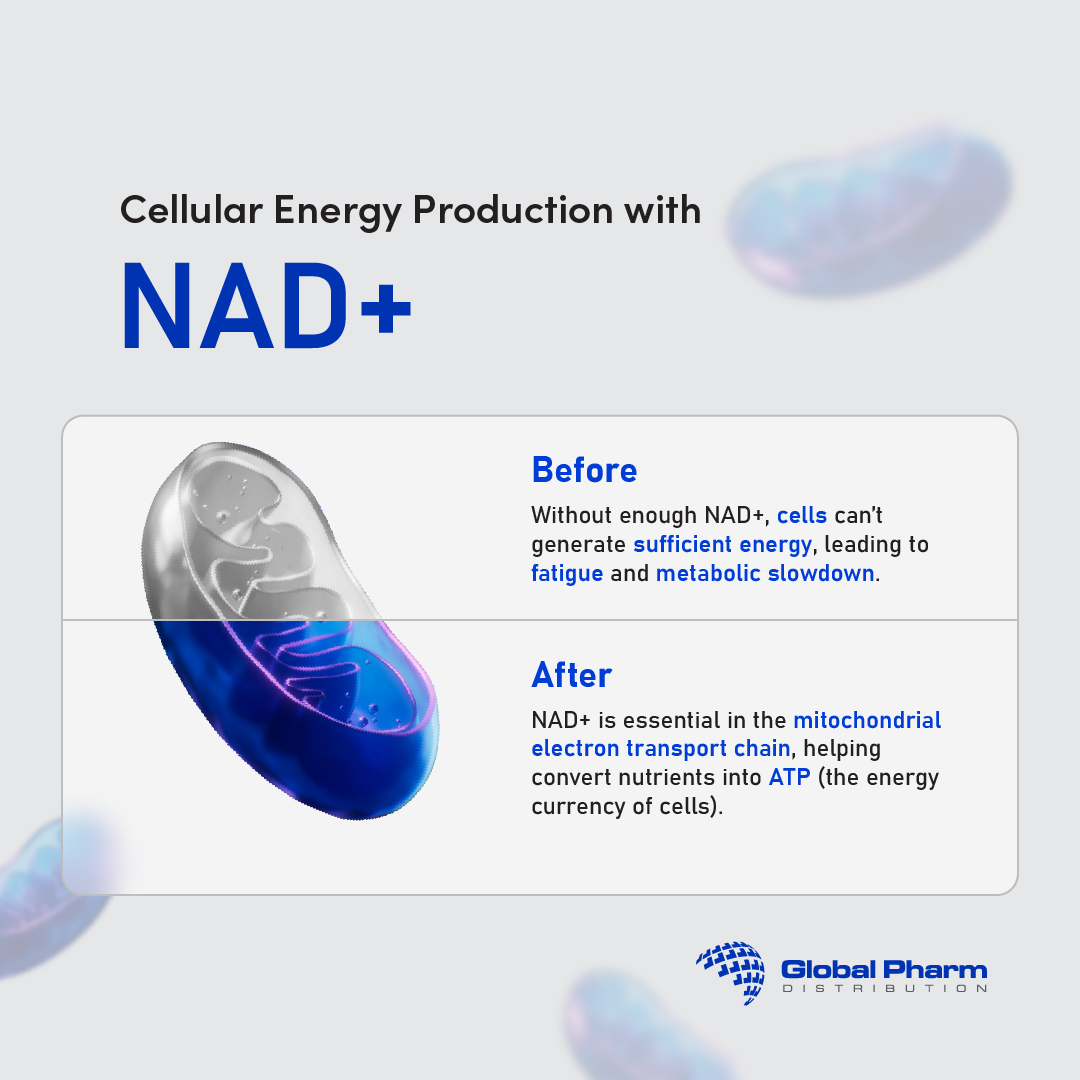
NAD+ is a fundamental coenzyme present in every living cell, playing a central role in cellular energy metabolism and redox reactions. This molecule alternates between oxidized (NAD+) and reduced (NADH) forms, driving electron transfer processes essential to mitochondrial ATP synthesis and glycolysis.
NAD+ also acts as a key substrate for two critical enzyme families:
- Sirtuins – regulators of gene expression and metabolic pathways
- PARPs (poly-ADP-ribose polymerases) – mediators of DNA repair and cellular stress response
Researchers utilize NAD+ to explore mechanisms underlying mitochondrial function, skeletal muscle bioenergetics, neuronal protection, and age-related cellular decline.
NAD+ functions as a redox-active cofactor capable of accepting and donating electrons in enzymatic reactions. In experimental systems, NAD+ availability is commonly treated as a measurable variable associated with metabolic flux, enzyme activity assays, and intracellular signaling readouts. NAD+ is also evaluated as a substrate for enzymes involved in post-translational modification processes, including ADP-ribosylation.
For research purposes only. Not intended for human consumption.